
Huab and Ugab
Prides whose home ranges reach across the Huab and Ugab river areas of the Kunene.
See the prides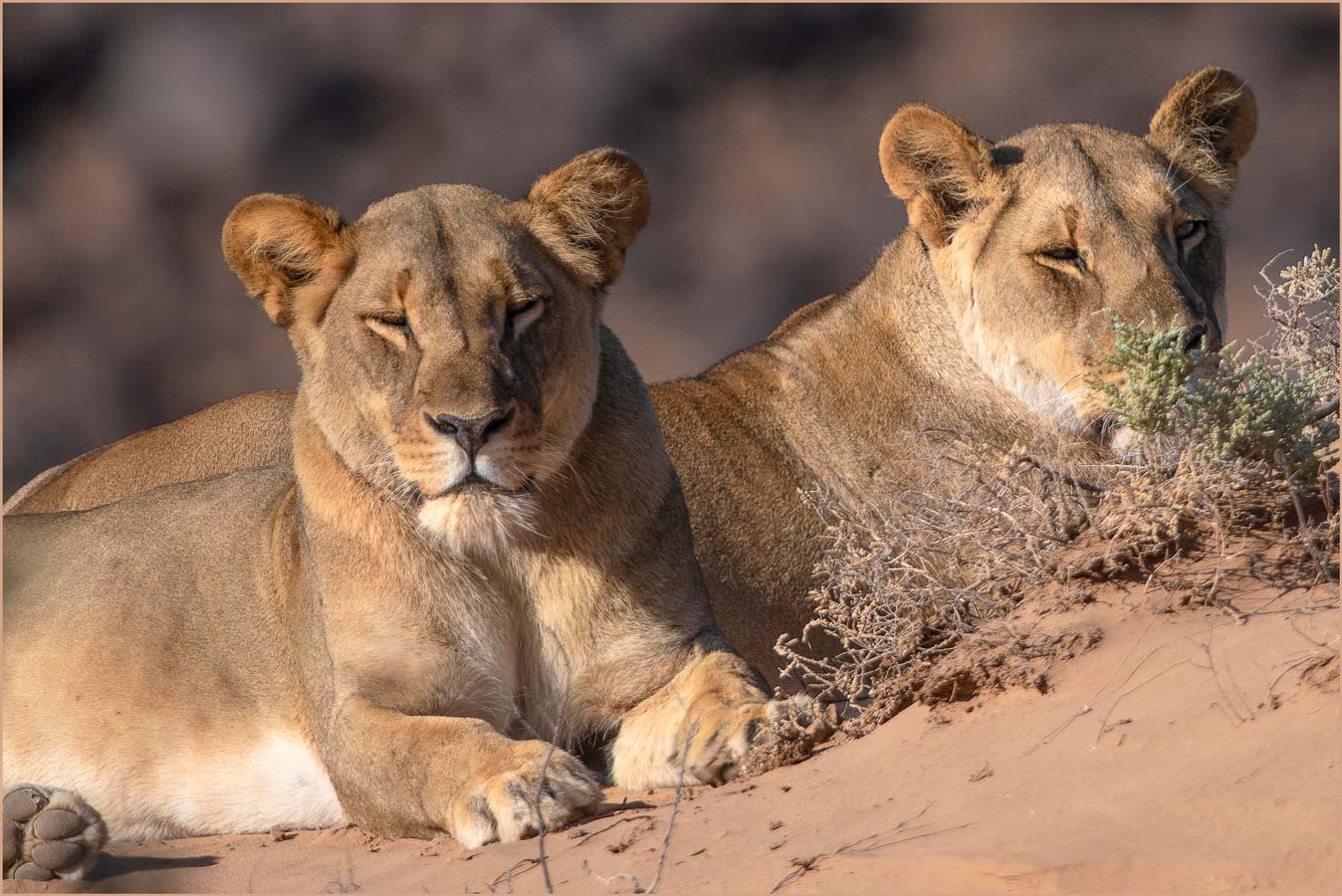
Our Work
Desert adapted lions originate from Etosha and the surrounding area, mostly dispersing from their natal prides in times of plenty to find their own home ranges in the dry Kaokoveld and Damaraland.
Meet the pridesOrigins and movement
In earlier times the migration routes for animals between the Etosha pans and the dry Kaokoveld and Damaraland area were open. Young lions left the prides they were born into and travelled across this landscape to establish territories of their own.
Those routes were later affected by a veterinary fence built to control foot and mouth disease, which shaped where desert lions could travel and settle.
Key points
Where the lions live
Prides whose home ranges reach across the Huab and Ugab river areas of the Kunene.
See the prides
Prides associated with the Hoanib river and its surrounding floodplain prides.
See the prides
Further named prides of the region, some ranging inside and outside the Palmwag concession area.
See the prides
Living alongside farming
As communal farming expanded across the Kunene, lion home ranges were compressed into overlapping, pocket-like areas. Livestock husbandry and wild lions increasingly shared the same ground, which is the root of the human-lion conflict that DeLHRA works to reduce.
Our work with the farmers of the different conservancies addresses this pressure directly, supporting better protected livestock enclosures and reduced losses for the communities that share the habitat.
Farmers & conservanciesKeep reading
Field trip reports, welfare updates and news on the ongoing challenges facing desert lions in the Kunene region are collected in our blog and news archive.
Blog & News