What lies ahead?
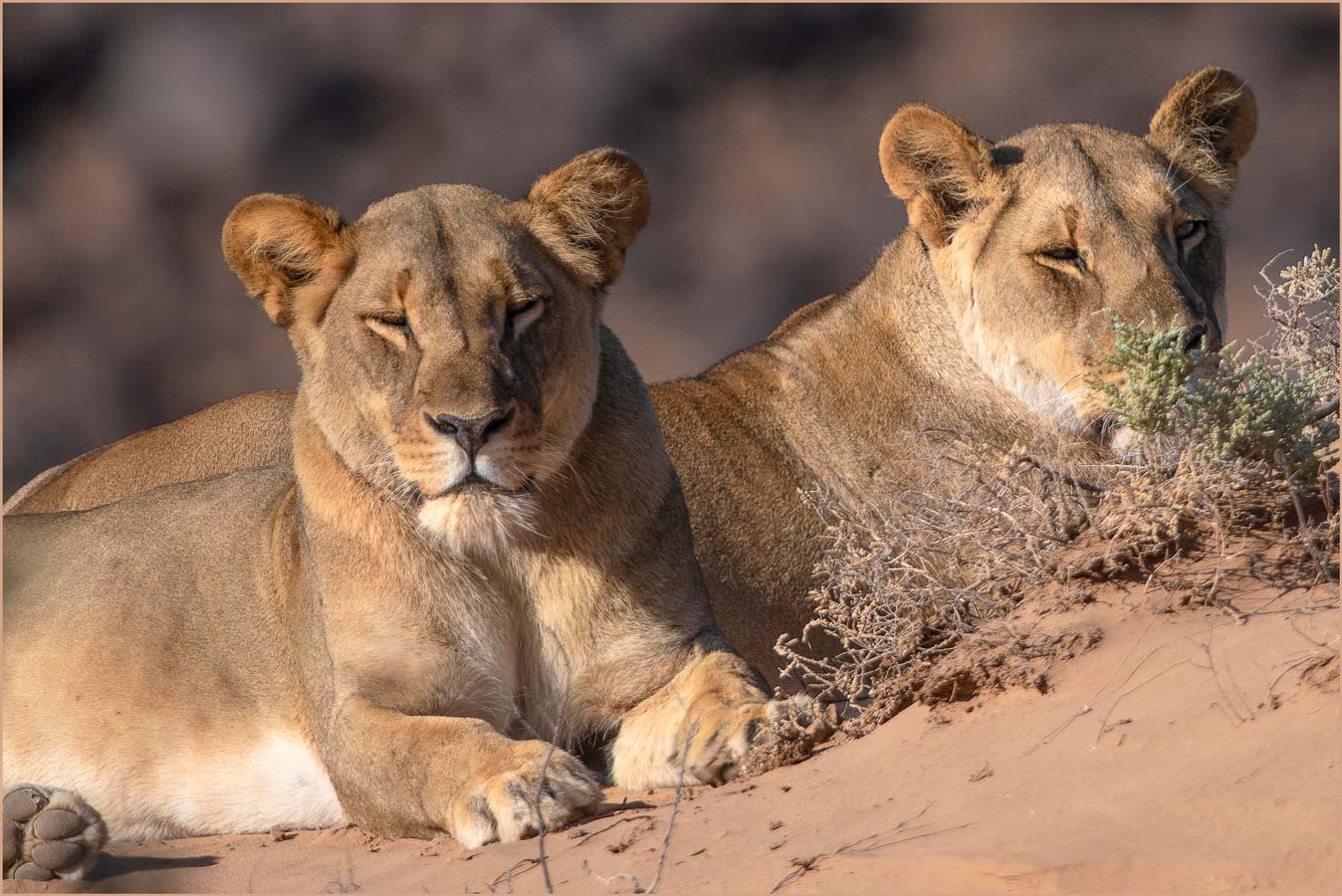
This report considers the challenges confronting desert-adapted lions in Namibia and the communities living alongside them. It focuses on the Obab Lion Pride, which roams the central western side of the Palmwag concession and the Skeleton Coast around the Unyabiver delta.
A poisoning incident
The report recorded the death of a collared female lion from poisoning. She was the fifth lion reported as poisoned in that area since October 2021.
Drought in the Kunene
The report also described a decade-long drought affecting the Kunene region. Conditions affecting available water, prey and livestock create an increasingly difficult environment for desert-adapted lions and the farming communities that share their habitat.
These observations were made in January 2022 and reflect the circumstances reported at that time. Continued conflict mitigation, farmer support and attention to lion welfare remain central to DeLHRA’s work with local communities.
The desert lions of the Kunene region face an uncertain future, and understanding those pressures is central to the mission of preserving wildlife alongside the farming communities of northwestern Namibia. This ongoing challenges report draws attention to a poisoning incident, prolonged drought conditions, and the wider difficulties confronting desert-adapted lions in a landscape where people and predators share the same scarce water and grazing. Focusing on the Obab Lion Pride, which ranges across the central western part of the Palmwag concession and the Skeleton Coast near the Unyabiver delta, the report illustrates how quickly a fragile population can be pushed toward the edge. Field observation, monitoring of prides, and careful documentation of conflict events remain essential tools for guiding conservation decisions.